
The magic that is not magic: transforming a leader is not a trick, it is a process
Alchemists have a bad reputation. We picture them as wizards trying to turn lead into gold with a secret formula. But in their laboratories something less magical and far more interesting was happening: they mixed, heated, observed, took notes, failed and tried again. Many of their techniques ended up as the foundation of modern chemistry.
They were not looking for a trick. They were looking to transform the nature of something.
That same search inspired Alquimista, our mentoring program for leaders. And what happens in it looks far more like a laboratory than a magic act.
Transmuting Is Not Disguising
In alchemy, to transmute is to change the essence of a material, not to paint it a different color. In leadership it is the same.
A course can teach you what delegating is. But if deep down you believe nobody will do it as well as you, you will keep checking every email from your team at eleven at night. You can know by heart how to give feedback and still explode in the committee meeting when someone questions your idea.
The problem is rarely one of knowledge. It lies in beliefs and in the micro-behaviors that switch on by themselves under pressure. That is where we work: not on adding content, but on turning automatic reactions into conscious responses.
That is why we say it is not training. It is transmutation.
Change Is Not an Event
We were sold the idea that a habit forms in 21 days. The evidence says otherwise. A systematic review published in 2024 in the journal Healthcare, covering 20 studies and more than 2,600 participants, found that forming a habit takes a median of 59 to 66 days, with enormous variation between people: from four to 335 days.
If a simple health habit takes months, imagine changing the way a leader reacts to conflict, ambiguity or pressure for results. A one-day workshop can inspire. It rarely transforms.
And leaders are not at their best to change on their own. According to DDI's Global Leadership Forecast 2025, 71% of leaders report more stress since taking their current role, and 40% have considered leaving their leadership role to protect their well-being. The same study notes that defining strategy and managing change are their two biggest gaps, yet only 22% of HR teams prioritize those skills.
More pressure, less support. That is a formula that does work, but in reverse.
There Is No Single Formula: There Are Combinations
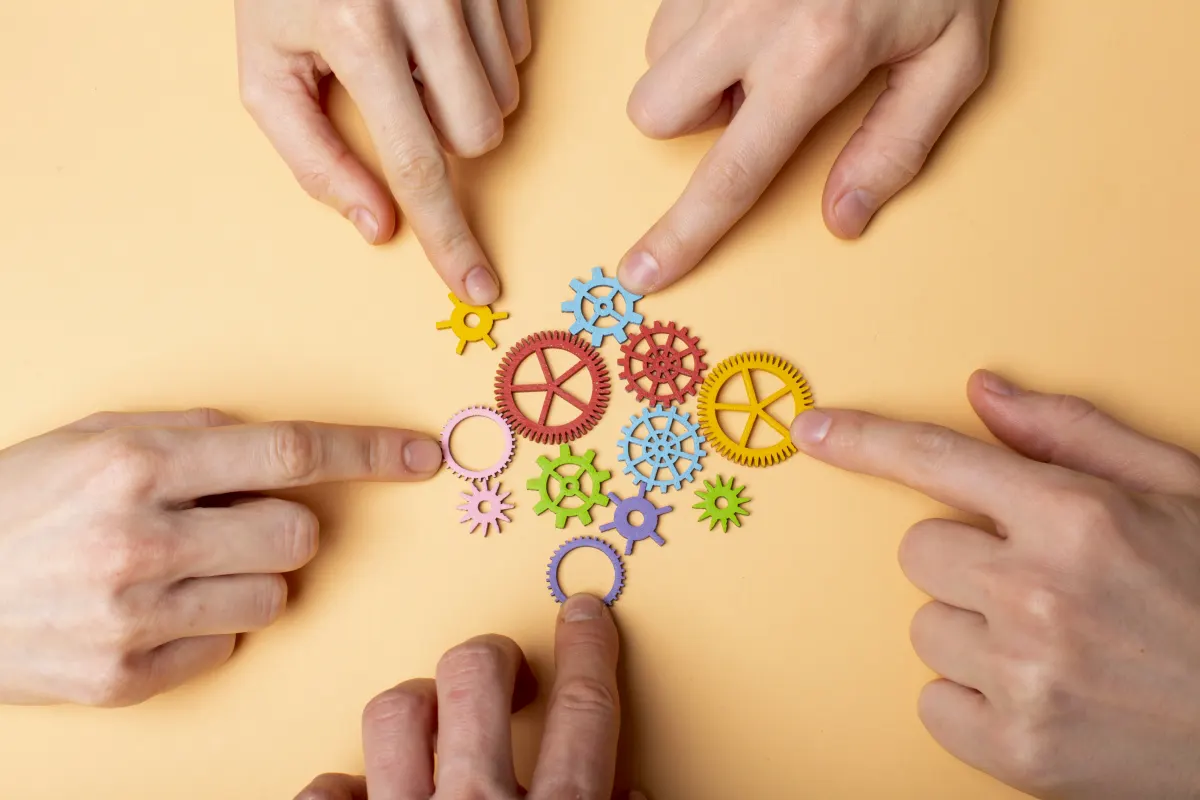
Here is the most alchemical part of the process. No two leaders are alike. The brilliant engineer who has just been promoted to manager does not need the same thing as the sales director with twenty years of experience who no longer connects with her new team.
That is why the process works like a laboratory:
- Diagnosis. Psychometric tests and deep conversation to understand traits, motivations and patterns. It is getting to know the elements we are going to work with.
- Hypothesis. A roadmap with few priorities and clear objectives. Not ten things at once: the two or three that, if they change, move everything else.
- Experiments. The leader tries new behaviors in their real work: in the committee meeting, in the difficult conversation, in the meeting that always runs long.
- Observation and adjustment. What worked is reinforced. What did not is changed. Without blame, as in any laboratory.
We work with the 70/20/10 model: 70% of learning happens through experience, by applying tools to real challenges; 20% through exposure, via the feedback and the mirror the mentor offers; and 10% through training, with content selected for specific moments.
Sometimes the first combination does not work. That is not a failure. It is information.
Three Levels of Transformation
A leader's change does not stay with them. It moves across three levels:
- Intrapersonal: me and my work. Habits, focus, discipline, the relationship with one's own time and one's own standards.
- Interpersonal: me and my environment. How I communicate, how I influence, what effect I have on my team and my peers.
- Organizational: me in the system. How my way of leading becomes sustainable and starts to shape the culture.
And something we learned along the way: the personal and the professional cannot be separated. The leader who does not sleep, who does not see their family or who lives in alert mode is not going to lead differently just because they learned a new model. Transformation is complete or it is not transformation.
The Magic That Isn't Magic
From the outside, it sometimes looks like magic. The boss who never delegated now has a team that makes decisions. The leader who avoided difficult conversations now schedules them. The committee that used to end in argument now ends in agreements.
But behind that “eureka!” moment there are weeks of deliberate practice, failed attempts, honest feedback and someone who walks alongside you without doing the work for you.
That is the true philosopher's stone: not a secret formula, but a process with method, patience and support. The magic is not in the result. It is in the discipline of repeating until change stops being effort and becomes part of who you are.
A Question to Take With You
Think of one of your behaviors that, if it changed, would make everything else easier. It could be how you react when something goes wrong, how you ask for help or how you say no.
That is your first experiment.
Sources
- Singh, B., Murphy, A., Maher, C. and Smith, A. E. (2024). Time to Form a Habit: A Systematic Review and Meta-Analysis of Health Behaviour Habit Formation and Its Determinants. Healthcare, 12(23), 2488.
- DDI (2025). Global Leadership Forecast 2025.